
Wholesale packaging materials from China can look simple at the inquiry stage, but the real decision depends on much more than naming a material and asking for a unit price. Foam density, bubble size, film thickness, carton quantity, printing, packing format, product dimensions, fragility, destination, and reorder plans all affect whether a quote is accurate and whether the final packaging will fit your operation.
This article helps buyers prepare a stronger request, compare quotations fairly, manage samples and MOQ expectations, and avoid production or freight surprises before a bulk order. It is especially useful if you are choosing between standard and custom packaging, confirming export packing details, or trying to keep repeat orders consistent through written specifications, approved samples, and quality checks.
Quick Packaging Decision Guide
| Buyer Question | Practical Reading | What to Check |
|---|---|---|
| Why do similar materials get different quotes? | Specifications may not be equal even if the material name is the same. | Thickness, density, size, printing, packing quantity, and carton format. |
| Is a low unit price actually cheaper? | Bulky packaging can increase freight, storage, and handling cost. | CBM, gross weight, carton size, pallet needs, and landed cost. |
| When does custom packaging make sense? | Customization helps when fit, protection, branding, or packing speed matter. | Tooling, sample approval, MOQ, tolerances, artwork, and lead time. |
| What should be confirmed before bulk production? | Approved samples should be linked to written specifications. | Material, size, sealing, printing, color, labels, carton marks, and packing method. |
| How can repeat orders stay consistent? | Reorders are easier when specs and changes are controlled. | Saved samples, artwork files, packing records, change notes, and inspection points. |
Quick Questions Before You Read
Q: What information should I send before requesting a quote?
Send product dimensions, weight, fragility, required material, size, thickness or density, printing needs, packing method, quantity, and shipping destination.
Q: Why do samples cost more than bulk units?
Samples often require separate setup, material preparation, cutting, printing checks, or tooling confirmation, so their cost is not the same as mass production.
Q: Should I choose standard packaging or custom packaging?
Standard packaging is usually simpler for flexible orders, while custom packaging is better when fit, protection, branding, or packing efficiency affects total cost.
Q: How does export shipping affect packaging decisions?
Export orders need early review of carton size, CBM, gross weight, pallet options, labels, warehouse rules, and protection during long-distance handling.
What Wholesale Packaging Buyers Should Clarify Before Asking for a Quote
Buyers sourcing wholesale packaging materials in China often want a fast unit price, but a reliable quote depends on more than the product name. “Bubble wrap,” “poly bags,” “foam packaging,” and “corrugated boxes” can each mean many different sizes, thicknesses, structures, packing methods, and production requirements. If the inquiry is too general, the supplier can only give a rough estimate, and that estimate may change once the real specification is confirmed.
A practical China packaging materials supplier will usually start by asking what the packaging needs to do, how it will be used, and where the order will ship. This is not unnecessary back-and-forth. It helps the supplier calculate material usage, choose a suitable production method, estimate packing volume, and understand whether the order is a trial order, a repeat order, or part of a long-term bulk packaging materials program.
At Daipak, the discussion usually starts with the product details rather than the material name. A clear inquiry helps avoid mismatched samples, incorrect pricing, and delays caused by changing specifications after the quote has already been prepared.
A useful inquiry also creates a simple trace from the buyer’s real product to the supplier’s recommendation. Product size, weight, photos, drawings, packing method, order quantity, and shipping destination give the supplier a clearer basis for choosing material, thickness, density, carton format, and export packing method. When these details are confirmed early, the quote is easier to connect later with the sample, production requirement, finished-goods check, and shipment preparation.
Product and Application Details Come First
The first question is what the packaging must protect, contain, wrap, cushion, mail, or separate. A foam sheet used between painted metal panels has a different job from a foam insert for a fragile electronic part. A plastic bag for dust protection is not the same as a courier bag for outbound shipping. A corrugated box for warehouse storage may not need the same structure as an export carton that will be stacked on a pallet.
Buyers should explain the product size, weight, shape, fragile points, and surface condition. Photos or drawings are often useful, especially for products with sharp corners, polished finishes, glass parts, protruding accessories, or uneven shapes. The supplier also needs to know whether the packaging will be used as inner protection, retail packing, e-commerce shipping, carton filling, pallet wrapping, or export packing.
Surface condition deserves special attention because many packaging failures are not dramatic breakage but scratches, rubbing marks, dust contamination, or pressure impressions. A glossy painted part, acrylic panel, plated component, display screen, or powder-coated metal surface may need soft separation, clean inner wrapping, or a non-abrasive foam layer before it is placed into a carton. If the product has sharp edges, the packaging may also need corner protection or a stronger outer carton so the edge does not cut through the inner wrap during handling.
This application detail affects material choice. EPE foam may be suitable for cushioning, surface protection, separators, pads, bags, or custom inserts. Bubble wrap may work well for flexible wrapping and general fragile product protection. Air cushion packaging may help with void filling and lightweight cushioning. Plastic bags and film products may serve dust protection, moisture resistance where appropriate, grouping, wrapping, or shipping support. Corrugated boxes provide outer packing, storage, and delivery structure. Many real orders need a combination rather than one material alone.
If packaging will directly contact food, food ingredients, or unpackaged consumer goods with food-contact expectations, the material discussion should move beyond ordinary strength and appearance. Buyers should confirm the intended contact condition, market, temperature exposure, and applicable material family before using food-contact language; U.S. references distinguish polymer and paper or paperboard food-contact materials under separate regulatory parts, and EU food-contact rules also treat food-contact materials as a defined safety category rather than a general packaging claim.[1]
Specification Details Make the Quote Usable
Once the application is clear, the quote needs usable specifications. For roll materials, buyers should confirm roll width, roll length, thickness, bubble size, foam density, film gauge, or perforation requirements where relevant. For bags, the supplier needs the open size, finished size, flap or seal style, thickness, material type, printing requirement, and packing quantity. For boxes, carton dimensions, board grade, flute type, printing, closing style, and quantity per bundle or carton may affect the offer.
Small specification differences can change the price more than buyers expect. A slightly thicker film may increase material cost. A higher-density foam may improve cushioning but also uses more material. A printed poly mailer needs artwork confirmation and production setup. A custom box with die-cutting has different preparation work from a plain regular slotted carton. Even carton packing quantity matters because it affects labor, carton usage, storage volume, and shipping volume.
To quote packaging materials more accurately, buyers should send the target material, dimensions, thickness or density, quantity, color, printing needs, packing method, and any tolerance requirements. If the buyer already has an existing sample, specification sheet, or previous supplier’s carton label, those details can help the new supplier understand the requirement faster. If the buyer is still choosing between materials, product photos and the intended packing method may be more useful than requesting a price from a material name alone.
A practical inquiry package should make the buyer’s decision path visible, not only the product request. For example, if the buyer is comparing a standard foam roll with a custom foam bag, the supplier should know whether the priority is lower unit cost, faster packing, cleaner surface protection, smaller export volume, or easier repeat purchasing. This context helps the factory recommend a structure that fits the actual operation instead of quoting several unrelated options that are difficult to compare.
Destination and Order Plan Affect the Commercial Offer
The shipping destination can affect more than freight. For export orders, the supplier may need to consider carton strength, packing volume, carton marks, pallet requirements, labeling, and how the goods will be handled before reaching the buyer’s warehouse. A shipment going to a distribution center may need different carton labels or pallet preparation than goods shipped to a port, a forwarder warehouse, or a fulfillment center.
Buyers should confirm the destination country, destination port or warehouse if available, preferred shipping method, and any carton mark requirements early. For bulky protective packaging such as foam rolls, bubble wrap, air pillows, and corrugated boxes, packing volume can have a strong effect on the final commercial offer. For compact items such as plastic bags or film rolls, carton size, gross weight, and handling requirements still matter.
The order plan also matters. A trial order may be quoted differently from a repeat program because the supplier needs to account for setup work, sample confirmation, packing arrangement, and future consistency. If the buyer expects regular bulk orders, sharing a forecast or estimated reorder cycle can help the supplier recommend a more practical specification and packing format from the beginning.
Compliance-Sensitive Uses Should Be Flagged Early
Some packaging requirements need a more careful discussion before price and sampling are finalized. Food-contact packaging, medical or pharmaceutical packing, cosmetics, children’s products, electronics that need static-control review, lithium batteries, hazardous goods, moisture-sensitive products, and environmental labeling all depend on the exact material, structure, destination market, and end use. A packaging supplier can help review material options and production feasibility, but buyers should confirm any required documentation, testing, labeling, or destination-market rule before production.
For regulated or higher-risk shipments, the inquiry should clearly state what the product is, whether the packaging will contact the product directly, how the goods will be transported, and whether the buyer needs specific supporting documents. Hazardous goods and certain battery shipments may require transport packaging and shipping preparation that follow applicable dangerous goods rules; UN model regulations and U.S. hazardous materials regulations are examples of references buyers and logistics teams may need to review for regulated shipments.[7]
Buyers should also be cautious with broad performance claims. Packaging can help reduce damage risk when material selection, carton fit, cushioning, stacking, sealing, palletizing, carrier handling, and route conditions are reviewed together, but no material name alone confirms performance in every shipment. If a buyer needs a documented protection level, the packaging should be matched to the product and shipping condition, then checked through an agreed sample review or relevant package-testing approach before bulk production.
Environmental and recycling language should be handled in the same practical way. If the buyer plans to make a recyclability, recycled-content, compostable, biodegradable, or similar claim on product pages, cartons, inserts, or labels, the buyer should confirm material composition, destination-market rules, recovery system acceptance, and any required third-party support before using that claim. This keeps purchasing communication useful without turning a material suggestion into an unsupported compliance statement.
How Material Type Changes MOQ, Price, and Production Planning
Minimum order quantity is not one fixed rule across all packaging materials. A wholesale packaging materials supplier may have different MOQ logic for EPE foam packaging, bubble wrap, air cushion packaging, plastic bags, corrugated boxes, and custom protective packaging because each category uses different production setups, raw materials, cutting methods, printing processes, and packing formats.
MOQ is usually tied to production efficiency and material waste, not only supplier policy. If a product uses a common material, standard width, regular thickness, and simple packing method, it is often easier to arrange. If the product needs a custom size, special color, printing, die-cutting, unusual thickness, or new mold work, the supplier may need a larger production commitment to make the order practical.
Standard Materials Usually Have More Flexible Starting Quantities
Standard materials are often easier to source because the supplier may already run similar specifications. Common bubble wrap roll sizes, regular EPE foam sheet or roll formats, plain plastic bags, standard mailer bags, air pillow film rolls, and regular corrugated cartons may fit existing production routines. These products still require confirmation, but they usually involve less setup than fully customized packaging.
For buyers testing a new supplier, standard products can be a practical starting point. They allow the buyer to check material feel, packing quality, communication speed, and shipment preparation before moving into larger or more customized orders. The trade-off is that standard packaging may not fit the product perfectly. It may protect well enough for simple applications, but it may also create extra void space, slower packing, or less consistent presentation.
A buyer should not judge flexibility only by quantity. A lower starting quantity can still become expensive if the cartons are bulky, the shipment is mostly air, or the product does not fit the packaging well. Standard material is useful when it matches the application closely enough and supports the buyer’s packing process.
Standard packaging can also create hidden labor costs when warehouse workers must cut, fold, tape, or add extra void fill for every order. A roll of foam or bubble wrap may have a lower material cost than a pre-made bag or insert, but hand wrapping can slow the packing station and make protection less consistent between workers. Buyers comparing standard and custom options should estimate packing time, carton space, tape use, rejection risk, and the value of the product being protected, not only the unit price of the material.
When environmental claims are part of the buying brief, the material name alone is not enough. “Recyclable,” “compostable,” “biodegradable,” or “eco-friendly” language should be checked against the destination market, accepted recovery system, labeling plan, and any third-party standard or certification the buyer intends to rely on; U.S. environmental marketing guidance specifically warns that green claims should be clear, qualified, and not misleading.[2]
Custom Packaging Usually Needs More Production Commitment
Custom packaging changes the production plan. A custom EPE foam insert may require product measurements, drawings, cutting work, bonding, lamination, or sample fitting. Printed poly mailers need artwork review, print layout confirmation, color checking, and production setup. Special-size bags may require adjusted sealing or cutting. Printed corrugated boxes may involve board selection, printing preparation, die-cutting, and packing review.
These custom steps can improve protection, branding, packing speed, and carton efficiency, but they also make MOQ more sensitive. If a material must be prepared only for one buyer’s size or color, the supplier needs to consider leftover material, machine setup time, cutting loss, and whether the same specification can be produced efficiently in bulk. Unusual specifications may also require more sample confirmation before production begins.
Buyers should decide which custom features are necessary and which are optional. A custom foam insert may be worth the extra process for fragile, high-value, or irregular products. A custom printed box may be important for retail or e-commerce presentation. But for simple warehouse protection, a standard foam sheet, bubble wrap roll, or plain carton may be more economical and easier to reorder.
MOQ Should Be Judged With Total Order Value
MOQ should not be evaluated only as a number of pieces, rolls, bags, or cartons. The more useful question is whether the total order value makes sense after production setup, packing, inland handling, export preparation, and freight are considered. A very small MOQ may look attractive, but if the shipment is bulky or the courier cost is high, the final cost per usable packaging unit may not be competitive.
Larger batches can sometimes reduce the unit handling cost because setup work, packing labor, carton preparation, and order coordination are spread across more units. This does not mean buyers should over-order. Packaging materials still need storage space, stable specifications, and reasonable demand planning. Overstocking the wrong size bag or carton can be just as costly as placing an inefficient small order.
A practical MOQ discussion should include quantity, specification, packing volume, destination, and expected reorder plan. If the buyer is planning a long-term product launch or regular warehouse use, it may be better to confirm a stable specification and order in a more efficient batch. If the buyer is still testing product fit, sample confirmation or a smaller standard-material order may reduce risk before committing to a custom bulk order.
Why Sample Costs Are Different From Bulk Order Pricing
Packaging material samples from China are priced differently from bulk orders because they are produced or prepared for a different purpose. A sample is used to confirm material feel, thickness, size, cushioning effect, printing layout, structure, and packing method. A bulk order price is based on efficient production, repeated specifications, material purchasing, packing quantity, and shipment preparation.
Sample cost may include material, cutting, sealing, printing setup, mold or tooling work, labor, and international courier fee. A stock sample may be simple to prepare, while a custom packaging sample can require hand work, machine adjustment, artwork preparation, or trial cutting. This is why a sample price should not be compared directly with the final bulk unit price.
Sample confirmation is especially important for custom protective packaging. A small mistake in foam fit, bag size, seal position, print layout, or carton structure can become expensive once thousands of pieces are produced. In some simple cases, detailed photos, videos, drawings, or written specifications may be enough before sampling, but for custom fit or branded packaging, an approval sample usually gives the buyer and supplier a clearer reference.
Stock Samples Confirm Material, Not Custom Fit
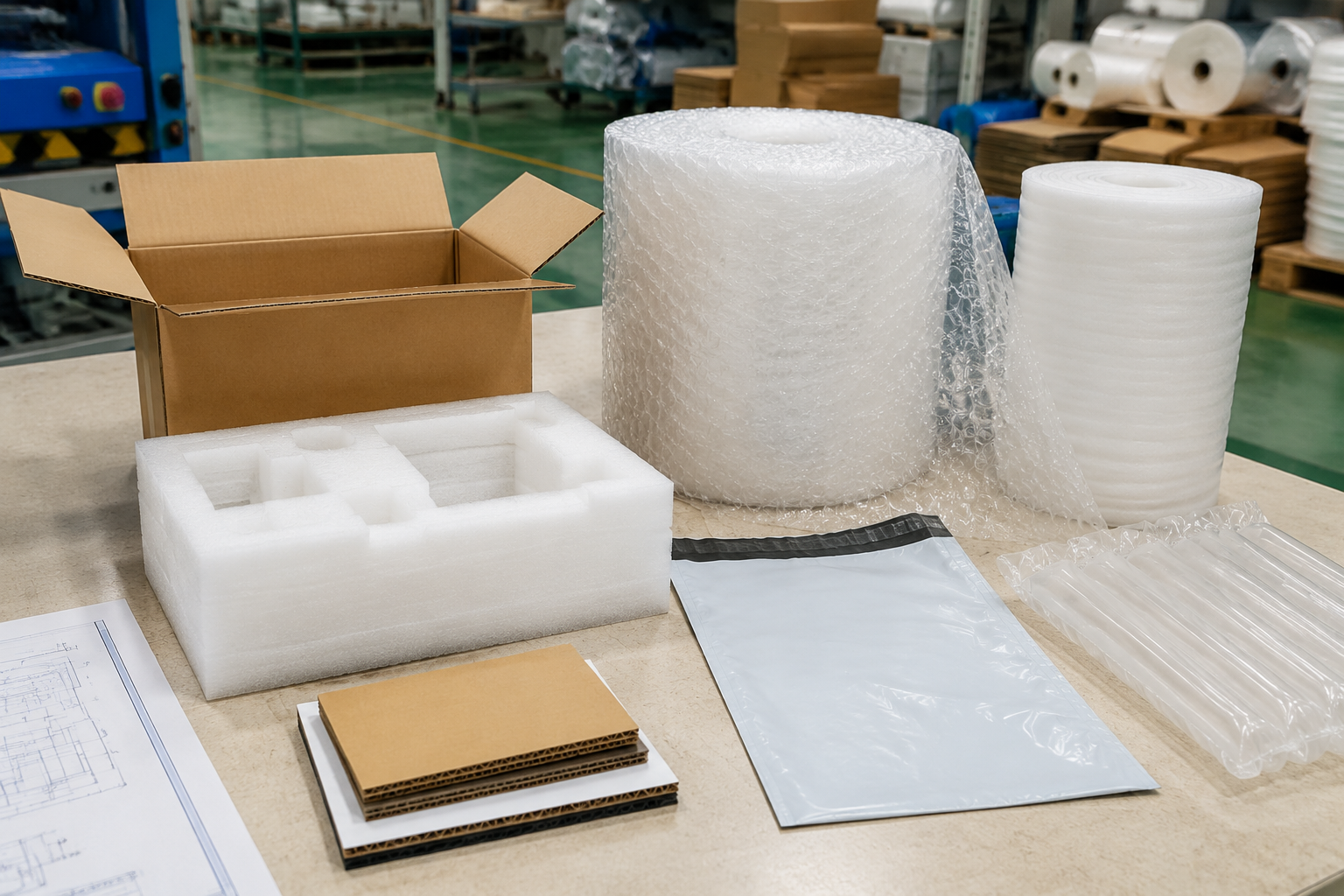
Stock samples help buyers check basic material quality. They may show the feel of EPE foam, the bubble structure of bubble wrap, the thickness of plastic film, the stiffness of corrugated board, or the sealing style of a common bag. For buyers comparing suppliers, stock samples can be useful before deciding whether the material family is suitable.
The limitation is that stock samples may not match the buyer’s exact size, print, color, density, or packing format. A foam sheet sample can show softness and surface protection, but it does not prove that a custom foam insert will fit the product. A plain poly mailer sample can show film texture and sealing quality, but it does not confirm final logo position or print color. A corrugated board sample can show board strength, but it may not represent the finished box structure.
Buyers should treat stock samples as a material reference, not a final production approval. If the final order requires custom size, printing, special sealing, die-cutting, or product-fit protection, the next step should be a custom sample or a detailed pre-production confirmation.
Custom Samples Confirm Fit, Structure, and Printing
Custom samples are used when the packaging must match a product, brand layout, or specific packing process. Examples include custom foam inserts for fragile parts, printed poly mailers for e-commerce orders, special-size plastic bags, custom air column packaging, and printed corrugated boxes. These samples require more preparation because the supplier is not simply pulling an existing product from stock.
For a custom foam insert, the sample may need product dimensions, photos, drawings, foam density selection, cutting method, and fit testing. For printed packaging, the supplier needs artwork files, print color requirements, logo position, print area, and sometimes proof approval. For special bags or boxes, the sample should confirm size, sealing, opening direction, board structure, flap design, and packing method.
A custom sample may not always reflect full mass-production speed or final production efficiency. Some samples are hand-made or produced in a small trial run. That is normal, but buyers should understand what the sample is meant to confirm. If the purpose is fit, cushioning, print layout, or structure, the approved sample should then be connected to written specifications before the bulk order begins.
A practical sample review should record what was actually checked. For example, the buyer and supplier can note whether the sample confirmed only material feel, or whether it also confirmed finished size, foam density, sealing strength, print position, carton quantity, and packing sequence. This makes the next step easier because production can follow a confirmed requirement instead of relying on a general statement such as “sample approved.”
Sample Approval Should Create a Clear Reference Standard
An approved sample should not stand alone. It should be linked to written specifications such as material type, size, thickness or density, color, printing file, seal style, carton packing quantity, and any tolerance requirements. Without this written reference, the buyer and supplier may remember the sample differently, especially if production happens weeks later or the order is repeated months later.
For bulk production, the approval sample becomes the practical standard for checking finished goods. It helps the supplier review material consistency, cutting accuracy, sealing quality, print position, color appearance, carton packing, and labeling. It also gives the buyer a clear basis for comparing delivered goods against the confirmed requirement.
Ms. Tang often keeps sampling and specification confirmation connected during order coordination because a sample approval is only useful when the production team can follow it clearly. Before placing a bulk order, buyers should confirm whether the approved sample, drawings, artwork, and purchase order all describe the same product. This simple check can prevent many avoidable production and receiving problems.
Specification Confirmation Note: Before production, Daipak encourages buyers to confirm size, thickness, density, structure, quantity, printing, labels, packing method, and approved sample reference in writing so the quotation, purchase order, and factory production record describe the same packaging.
What Really Goes Into a Packaging Materials Quotation
A packaging materials quotation is more than a unit price written next to a product name. For a buyer comparing bubble wrap, EPE foam, plastic bags, air cushion packaging, or corrugated boxes, the quote usually reflects material usage, production setup, packing method, export preparation, and sometimes a freight estimate. Two offers may look different because the suppliers are not quoting the same thickness, density, carton quantity, printing method, or packing format.
This is why buyers should compare quotations by specification, not only by the lowest number. A lower unit price can hide thinner film, lower foam density, weaker board grade, looser roll length, fewer pieces per carton, or unclear shipment terms. A useful bulk packaging quote should make the main cost assumptions visible enough for the buyer to check whether the offer matches the real order requirement.
From a supplier side, the quotation also needs to reflect how the product will be made. A China protective packaging supplier may need to calculate raw material consumption, cutting waste, sealing work, printing setup, carton packing, pallet needs, and inland transport before sending a reliable price. If the buyer changes the size, quantity, artwork, or destination after the quote, the price may need to be reviewed again.
Material Usage Is Usually the First Cost Driver
Material consumption is normally the starting point of the price. For EPE foam packaging, size, thickness, density, and cutting shape all affect how much foam is used. A simple foam sheet and a shaped foam insert may use the same material family, but the production waste and cutting work can be very different. For bubble wrap, the roll width, length, bubble size, film structure, and total square meters matter more than the product name alone.
Plastic bags and film packaging are usually calculated by size, film gauge, bag format, sealing style, and quantity. A small change in thickness can affect both the unit price and the strength of the bag. Corrugated boxes are affected by board grade, flute type, box size, printed area, and whether the box is a standard carton, postal box, zipper box, or die-cut structure. Air cushion packaging may depend on film type, roll specification, air column design, and whether the product needs void filling or more structured cushioning.
Buyers can usually improve quotation accuracy by sending product dimensions, required packaging size, thickness or density targets, photos, drawings, current packaging samples if available, and the expected packing method. If there is no confirmed specification yet, the supplier can often suggest options, but the first price should be treated as a working estimate rather than a fixed production reference.
Printing, Tooling, and Custom Work Add Setup Cost
Printing and custom work often add cost before mass production even starts. Logo printing may require artwork review, plate preparation, color confirmation, print position checking, and sometimes a printed sample or proof. For printed poly mailers, corrugated boxes, garment bags, courier bags, or branded protective packaging, the printing cost depends on the number of colors, print area, repeat layout, and production method.
Tooling cost may apply when the packaging needs a mold, cutting die, special sealing tool, or shaped structure. Custom foam inserts, die-cut corrugated boxes, special-size bags, laminated film packaging, and shaped air column packaging may require more preparation than standard rolls or plain cartons. These costs are not always part of the unit price in the same way, so buyers should ask whether tooling cost, mold cost, plate cost, or sample cost is listed separately.
A custom packaging supplier should also confirm whether the setup cost is for one-time preparation, a specific design, or a specific size. If the buyer later changes the logo size, product shape, carton structure, or foam insert layout, the original setup may not apply. This is one reason written drawings, approved artwork files, and clear sample approval records are important before production begins.
| Quotation Factor | What Can Change the Price | What the Buyer Should Confirm |
|---|---|---|
| Material | Thickness, density, film gauge, board grade, roll size, cushioning structure | Required protection level, exact size, product weight, surface protection needs |
| Custom Work | Printing, tooling, mold, die-cutting, lamination, special sealing | Artwork file, drawing, color, logo position, sample approval requirement |
| Packing | Pieces per carton, roll packing, compression, pallet use, carton strength | Carton quantity, labeling needs, warehouse receiving rules, export handling needs |
| Shipment Preparation | Inland transport, export packing, carton marks, volume, gross weight | Destination, port or warehouse, pallet preference, required carton marks |
A fair comparison should include what happens after the packaging arrives at the buyer’s warehouse. If one quotation uses a thinner bag that tears during loading, a weak carton that collapses on the pallet, or a foam format that requires extra labor to trim, the apparent saving may disappear quickly. Procurement teams often get a clearer result by comparing cost per packed product, cost per shipped carton, or cost per accepted delivery instead of comparing only the material unit price.
Packing Method Can Change Both Factory Cost and Freight Cost
Packing method can change the final commercial picture even when the packaging material itself stays the same. Bubble wrap may be quoted as rolls, sheets, bags, or bundled pieces. EPE foam can be packed as sheets, pads, rolls, bags, inserts, or compressed bundles depending on the product and protection requirement. Corrugated boxes may ship flat, bundled, strapped, or palletized. Plastic bags and film rolls may need cartons with specific gross weight limits for warehouse handling.
Factory cost changes because packing takes labor, cartons, labels, wrapping film, pallet preparation, and space. Freight cost changes because protective packaging can be bulky. Foam rolls, bubble wrap, and air cushions often occupy more volume than their material weight suggests. Corrugated boxes ship flat but still take carton or pallet space. Compact products such as poly mailers or garment bags may look simple, but carton quantity, roll weight, and pallet arrangement still affect handling and shipping preparation.
For export orders, buyers should ask for packing details such as carton dimensions, quantity per carton, gross weight, estimated volume, label requirements, and carton marks. These details help procurement teams compare offers more accurately and avoid surprises when arranging freight or receiving goods at the warehouse.
How Customization Affects Lead Time, MOQ, and Risk Control
Custom packaging materials from China can help a buyer improve product fit, reduce wasted space, strengthen protection, or support brand presentation. The trade-off is that customization adds confirmation steps. A custom size, special thickness, foam density, printed logo, shaped insert, or non-standard carton structure may affect MOQ, production scheduling, sample cost, and the time needed for review before production.
Customization should be treated as a controlled process rather than a simple product preference. A buyer may start with a practical goal, such as reducing scratches on a painted surface, keeping glass bottles separated, improving parcel presentation, or making warehouse packing faster. From there, the supplier can compare materials such as EPE foam, bubble wrap, air cushion packaging, plastic bags and film, corrugated boxes, or combined protective packaging.
At Daipak, custom discussions usually begin with the product details rather than the material name. A fragile electronic part, a polished metal component, and an e-commerce retail box may all need protection, but the correct custom structure can be very different. The more clearly the buyer confirms dimensions, tolerances, artwork, packing quantity, and approved sample records, the easier it is to control risk during bulk production.
Simple Customization Usually Starts With Size and Material
Simple customization often means adjusting dimensions, material thickness, roll length, bag size, foam density, or carton size. These changes may look small, but they can affect material usage, machine setup, carton packing, and unit price. For example, increasing the width of a foam sheet or bubble wrap roll may change how efficiently the supplier can cut from standard material widths. A different bag size may change the sealing position and carton quantity.
For EPE foam packaging, buyers should confirm thickness, density, sheet size, bag format, or insert dimensions. For bubble wrap, the key details may include bubble size, film thickness, roll width, roll length, and whether the buyer needs rolls, sheets, or bags. For plastic bags and film packaging, thickness, opening style, seal type, bag size, and packing count should be reviewed. For corrugated boxes, length, width, height, board grade, flute type, and carton style should be confirmed before pricing is finalized.
The practical risk is that a small specification change can move the order from a standard production arrangement into a more customized run. That may affect MOQ, sample preparation, material procurement, and packing volume. Buyers should not assume that “almost the same size” will always keep the same price or production plan.
Printing Requires Extra Artwork and Color Confirmation
Printed packaging needs more control than plain packaging because the supplier must review both the packaging structure and the visual content. Logo printing on poly mailers, courier bags, garment bags, bubble bags, corrugated boxes, or film products may require confirmation of artwork file format, logo position, print size, print color, print area, and the side of the package to be printed.
Color should be handled carefully. A screen view does not always match printed material, and different substrates can affect the final appearance. A logo printed on kraft corrugated board may not look the same as the same logo printed on white film or a glossy mailer bag. If color consistency is important, buyers should ask about proofing, sample confirmation, or a clear reference before mass production.
Artwork changes can also affect timing. Missing files, low-resolution logos, unclear color instructions, or late branding revisions can delay sample approval and production scheduling. A buyer planning printed packaging should prepare final artwork early and confirm whether the supplier needs vector files, color references, print placement drawings, or a signed approval before production starts.
Structural Customization Needs Stronger Pre-Production Review
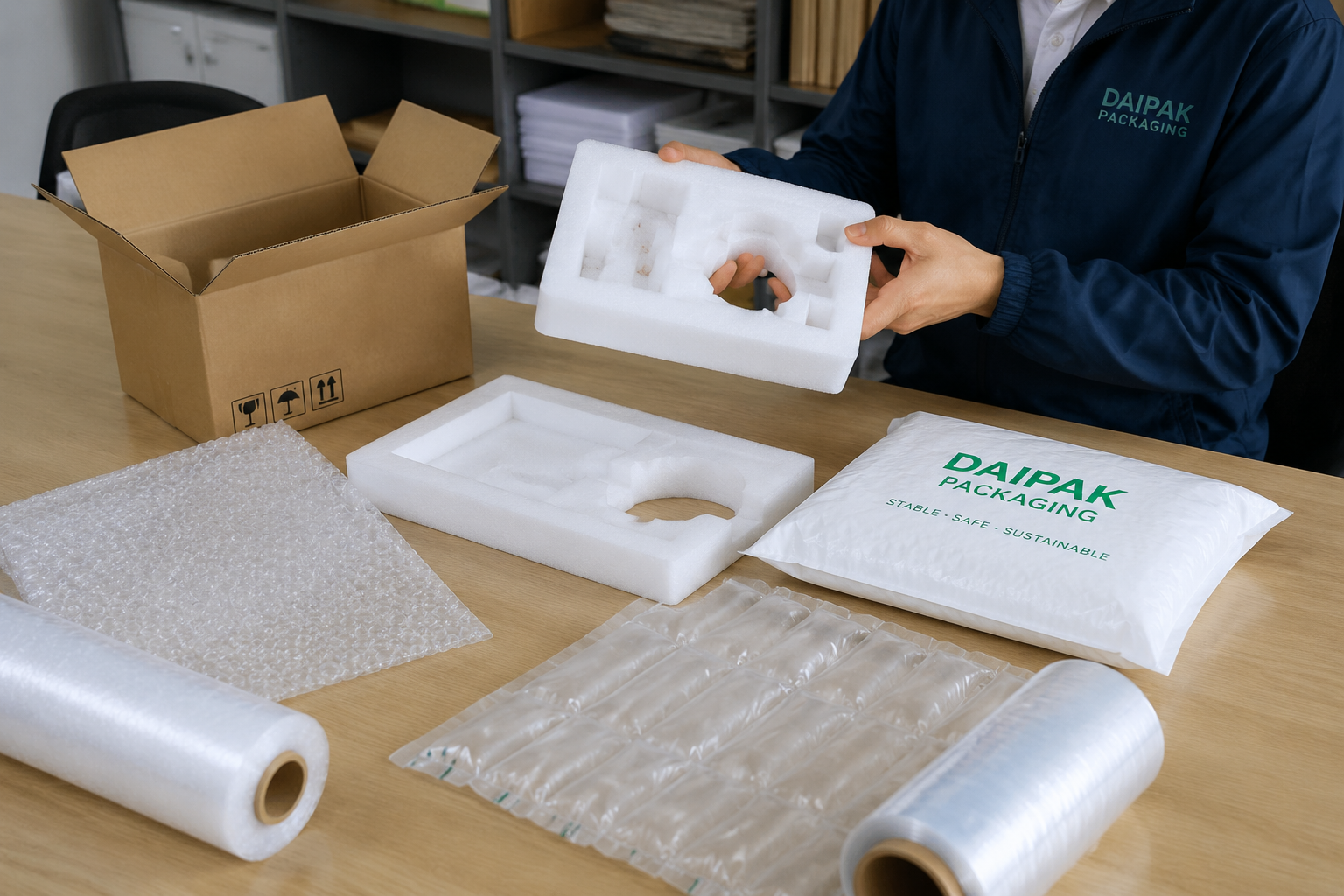
Structural customization carries higher risk because the packaging must fit the product and survive the intended handling process. Custom foam inserts, die-cut corrugated boxes, multi-layer protective packaging, air column bags, corner protectors, and combined foam-and-carton structures should be checked against the actual product size, product weight, fragile points, surface finish, carton space, and shipping method.
A custom foam insert may hold the product well in one position but create pressure on a fragile corner if the tolerance is too tight. A die-cut box may look correct in a flat drawing but behave differently when folded and packed. A combined packaging structure may need testing to confirm that the inner protection, outer carton, and void filling work together. The risk is not only breakage; poor structure can slow packing, increase carton size, create receiving problems, or make repeat production inconsistent.
Before approving structural custom packaging, buyers should review drawings, product photos, sample fit, tolerances, material thickness or density, carton size, and packing sequence. If the product has sharp edges, a coated surface, glass parts, electronic components, or high compression sensitivity, those details should be discussed before the sample is made. The best custom structure is not always the most complex one; it is the one that protects the product while staying practical for bulk packing.
For higher-value, fragile, or route-sensitive shipments, buyers can ask whether the proposed packaging should be validated through recognized transport packaging tests rather than relying only on appearance or hand checks. ASTM D4169 is a standard practice for performance testing shipping containers and systems, ASTM D4728 addresses random vibration testing for shipping containers, and ISTA 3A is used as a packaged-product test procedure overview for parcel delivery systems.[3]
Buyers should also think about how the finished package will be assembled by real warehouse staff. A foam insert that requires the product to be turned several times, a bag opening that is too tight, or a carton that needs excessive tape can reduce packing speed and increase operator mistakes. When possible, the sample should be checked using the same packing sequence expected in bulk operation, including inner wrapping, product placement, void filling, carton closing, label position, and pallet stacking direction.
The Bulk Order Process From Inquiry to Production
The bulk packaging order process becomes much easier when each stage has a clear purpose. A buyer does not need to make the process complicated, but the order should move in a logical sequence: inquiry, supplier review, quotation, sample or specification confirmation, purchase order, payment arrangement, pre-production check, bulk production, inspection, packing, shipment preparation, and follow-up after delivery.
Direct factory communication helps because packaging details often affect each other. A change in thickness can affect carton quantity. A change in carton size can affect freight volume. A change in artwork can affect production setup. A change in destination can affect carton marks or pallet preparation. Working with a packaging manufacturer in China is usually smoother when product, specification, commercial terms, and shipping preparation are kept connected from the beginning.
For first-time buyers, the biggest risk is treating the order as only a price discussion. For repeat buyers, the bigger risk is assuming last order details still apply when the product, quantity, destination, or packing requirement has changed. A controlled process helps both sides avoid mismatched samples, incorrect production assumptions, and late-stage delays.
Inquiry and Quotation Set the Commercial Baseline
The inquiry stage defines the basic order direction. The buyer should send the packaging type, product use, dimensions, thickness or density target, order quantity, printing needs, packing method, and destination. Photos, drawings, current packaging samples, or warehouse packing instructions can make the supplier review much more accurate.
The quotation then sets the commercial baseline. It should clarify the product specification, unit price, quantity basis, custom cost if any, packing details, and shipment-related assumptions where applicable. If the buyer is comparing more than one supplier, the specifications should be aligned before making a decision. Comparing a thicker foam insert with a thinner foam pad, or a printed carton with a plain carton, will not give a fair cost comparison.
This is also the stage where supply feasibility should be discussed. Unusual sizes, tight tolerances, special colors, printed packaging, or structural protective packaging may need more review before the supplier can confirm production planning. A clear inquiry reduces unnecessary back-and-forth and helps the buyer receive a quotation that can actually support purchasing decisions.
Sample Approval Locks the Technical Direction
Sample approval is the bridge between the commercial offer and bulk production. For standard materials, the sample may confirm material feel, film thickness, bubble structure, foam density, bag sealing, or corrugated board strength. For custom packaging, the sample should confirm fit, structure, printing position, size tolerance, and packing method.
The approved sample should not stand alone. It should be connected to written specifications such as dimensions, material type, thickness, density, color, artwork version, carton packing quantity, and any important tolerance. If the buyer approves a sample but the purchase order lists different details, the supplier may need to pause and reconfirm before production.
Ms. Tang often keeps sampling and specification confirmation connected in the order flow. This matters because a small adjustment after sample approval, such as changing a bag size or carton quantity, can affect material usage, packing preparation, and production scheduling. Buyers should treat approval as a clear reference point, not as a loose visual preference.
Bulk Production Needs Stable Specifications
Bulk production works best when the specification is stable before materials are prepared. Once the supplier starts cutting foam, sealing bags, printing film, forming air column packaging, or producing corrugated boxes, late changes can create waste, delay the order, or cause inconsistency between batches. A change that looks minor in an email may require a new production setup on the factory side.
Before production starts, buyers should confirm the final purchase order against the approved specification. Important details include product size, packaging size, thickness, density, printing layout, artwork version, color, quantity, carton packing, label requirements, and destination. If there are multiple SKUs, each one should have its own clear specification to avoid mixing sizes, prints, or packing quantities.
Quality review also begins during production, not only at the end. The supplier may check material preparation, cutting accuracy, sealing quality, printing clarity, bonding, lamination, or carton forming depending on the product type. Stable specifications give the production team a fixed standard to follow and make the finished-goods review more meaningful.
During production, each check is more useful when it points back to a confirmed requirement. Cutting should be checked against the approved dimensions, sealing against the agreed bag style, bonding or lamination against the sample structure, printing against the approved artwork, and forming against the drawing or carton style. This practical connection helps the factory identify whether a difference is a normal tolerance issue, a production adjustment, or a detail that needs buyer confirmation before the order continues.
Packing and Shipment Preparation Complete the Order
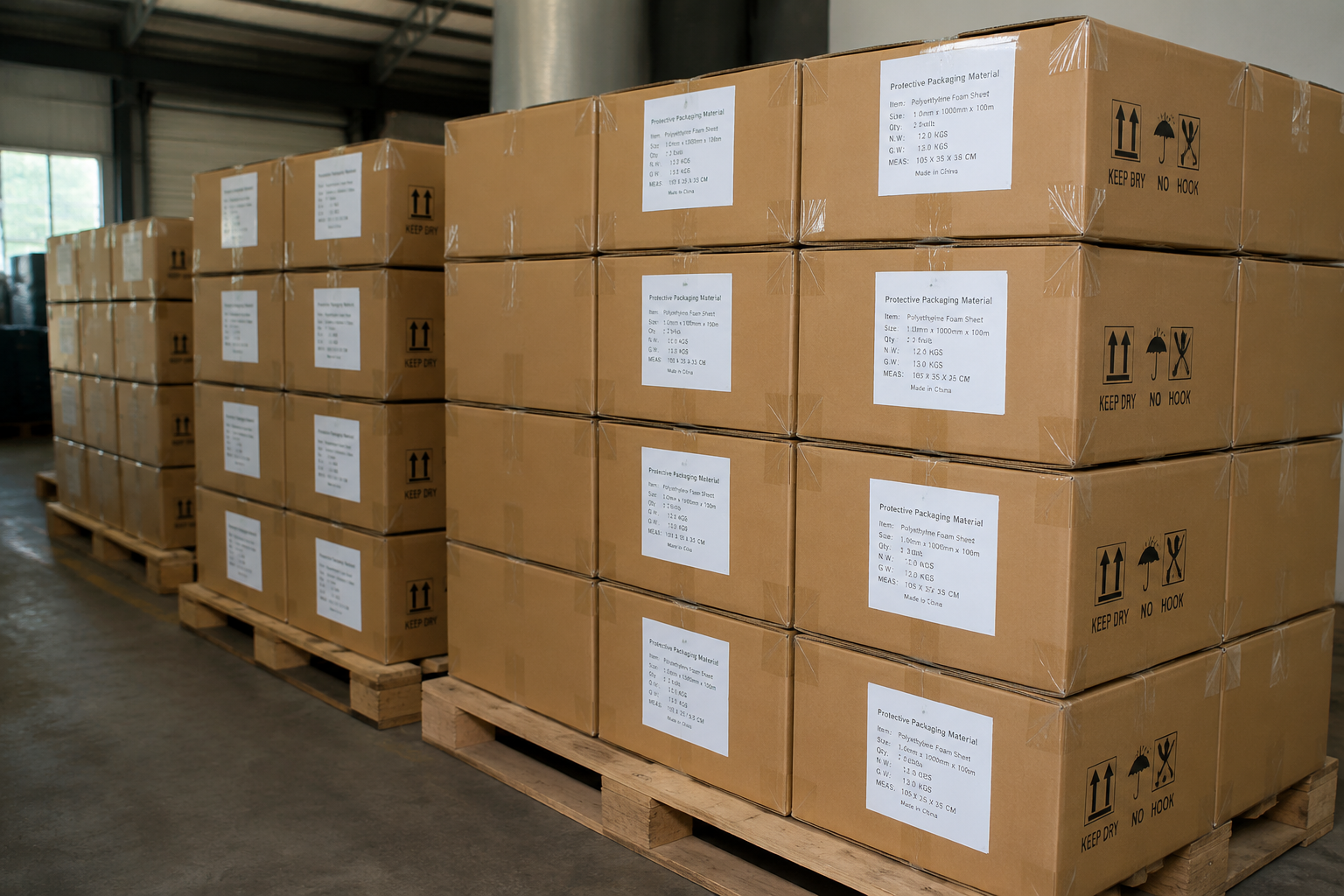
After production, the order still needs proper packing and shipment preparation. Packaging materials may be packed in rolls, bundles, inner bags, cartons, compressed packs, or pallets depending on the product. The supplier should review carton quantity, carton size, gross weight, labels, carton marks, and any warehouse receiving requirements before shipment.
Export preparation is especially important for bulky protective packaging. Foam, bubble wrap, air cushions, and corrugated boxes can occupy significant space, so carton dimensions and loading volume should be checked early. Plastic bags, film rolls, and mailer bags may be more compact, but carton strength and weight still matter for handling. If the buyer needs pallets, barcode labels, SKU marks, or specific carton marks, those details should be confirmed before packing is completed.
The order is not fully finished until the buyer can identify what is being shipped, how it is packed, and how it should be received. Clear packing records, carton marks, and shipment photos can help overseas buyers coordinate warehouse receiving and repeat-order planning. This final step often prevents avoidable confusion after the goods arrive.
For mixed export orders, shipment preparation should also check whether different packaging materials can be packed together without creating handling problems. Dense film cartons should not crush light foam cartons, printed boxes should be protected from abrasion where needed, and cartons for different SKUs should remain easy to identify when the buyer’s warehouse receives the shipment. This kind of practical packing review helps the buyer avoid sorting issues even when the production itself is correct.
Shipment preparation is also the point where packing traceability becomes visible to the buyer. Carton quantity, inner packing, labels, carton marks, pallet preparation, loading photos, and destination details should match the confirmed order information. If the buyer’s warehouse later reports a shortage, mixed SKU, damaged carton, or label problem, these packing details give both sides a practical basis for checking what was prepared and what should be adjusted on the next shipment.
Quality Control Points Buyers Should Confirm Before Shipment
Packaging materials quality control should start before the finished goods are packed into export cartons. For overseas bulk orders, the most useful checks are the ones tied to the approved specification: material type, size, thickness or density, printing, sealing, packing quantity, and carton marks. If those details are not clear, a final check becomes harder because the factory has no stable reference for judging whether the goods match the order.
A pre-shipment check is not only about finding visible defects. It also helps confirm whether the packaging materials can be received, stored, and used correctly at the buyer’s warehouse or packing line. A roll of bubble wrap may look acceptable but still create problems if the roll width is wrong. A poly mailer may be clean and well sealed but still fail the buyer’s packing process if the adhesive strip position is off. A foam insert may appear well cut but still leave too much movement inside the carton if the product fit was not reviewed.
As a protective packaging manufacturer, Daipak usually treats quality review as a process that runs from specification confirmation through bulk packaging production and packing review. The goal is to reduce avoidable mismatch before shipment, not to promise that packaging alone can overcome every shipping risk. Product design, carton strength, packing method, carrier handling, and destination conditions all affect the final protection result.
Material and Size Checks Protect the Specification
The first group of checks should confirm that the supplied material matches what the buyer approved. For EPE foam packaging, this may include foam thickness, density, sheet size, bag size, insert shape, bonding position, or cut accuracy. For bubble wrap and air cushion packaging, buyers may need to confirm film structure, bubble size, roll width, sheet length, bag dimensions, or air retention expectations where applicable. For plastic bags and film products, the key points often include film gauge, bag width and length, sealing quality, opening direction, handle shape, adhesive strip, or roll format. For corrugated boxes, board grade, flute type, box dimensions, slotting, folding, and printed layout should be checked against the approved file or sample.
Size tolerance matters because packaging materials are often used in repeated packing operations. A small difference may not look serious on one piece, but it can slow a packing line or cause poor fit across thousands of units. Foam inserts that are too tight can make packing difficult or press against delicate product parts. Bags that are too narrow may tear during loading. Cartons that are slightly undersized may bulge after the inner protection is added. Buyers should confirm which dimensions are critical and which dimensions allow normal production tolerance before production starts.
Thickness and density checks are also important because they affect both performance and cost. A lower film gauge, thinner foam sheet, or lighter board may reduce material use, but it can also change cushioning, puncture resistance, surface protection, or carton stacking strength. The buyer does not need to inspect every technical detail personally, but the supplier should have a clear reference for the agreed material specification and be able to provide production photos or measurement records when requested.
Where stacking strength is a critical requirement, carton compression should be treated as a testable property instead of a guess from board description alone. ASTM D642 provides a standard method for determining compressive resistance of shipping containers, which makes it relevant when buyers need to compare carton strength under defined conditions.[4]
Printing and Custom Details Need Visual Review
Printed packaging requires a different type of attention. The check is not only whether the logo appears on the product, but whether the logo position, print size, color direction, clarity, and layout match the approved artwork or sample. This is especially important for printed poly mailers, courier bags, garment bags, printed corrugated boxes, and branded protective packaging used in e-commerce or retail distribution.
Color should be reviewed with practical expectations. Printing on plastic film, corrugated board, and foam surfaces may not look identical because each material absorbs or reflects ink differently. Buyers should avoid approving a color only from a screen image if brand color is sensitive. A physical sample, printed proof, or clearly confirmed color reference can reduce misunderstanding before bulk production. If exact brand matching is required, that requirement should be discussed early rather than after the goods are finished.
Custom details also include sealing, lamination, adhesive strips, handles, die-cut windows, zipper structures, perforation lines, or foam bonding points. These details affect how the packaging is used, not just how it looks. From the production side, Mr. Wang often checks whether cutting, sealing, bonding, or printing details can be repeated consistently during batch production. That consistency is especially important when the packaging will be used by multiple warehouse workers or on a regular packing line.
Packing Quantity and Carton Marks Prevent Receiving Problems
Finished packaging materials still need a packing review before shipment. Buyers should confirm the quantity per carton, inner packing method, carton count, gross weight, carton size, and whether the goods are packed in rolls, bundles, bags, sleeves, or flat stacks. This affects not only freight and warehouse storage, but also how quickly the receiving team can identify and distribute the materials after arrival.
Carton marks should be treated as part of order control. A clear carton mark may include product name, size, quantity, item code, purchase order number, carton number, destination reference, or other buyer-required information. For distributors and warehouse teams handling several SKUs at once, unclear marks can lead to miscounts, picking errors, or delays during inbound receiving. If the buyer needs barcodes, SKU labels, pallet labels, or special warehouse routing marks, those should be confirmed before packing is finished.
Photos before shipment can be useful for overseas buyers, especially when they cannot inspect the goods in person. Practical photo checks may include finished product appearance, measured dimensions, packing quantity, carton marks, pallet arrangement, and loaded carton condition. Photos do not replace every inspection method, but they give the buyer a clearer view of whether the order has been prepared according to the agreed specification.
Quality Review Note: For bulk packaging orders, Daipak’s review focus is practical consistency: dimensions, appearance, sealing, cutting, bonding, printing, labels, packing quantity, carton marks, and shipment photos should be checked against the approved specification before release.
How Freight, Packing Volume, and Destination Affect the Final Cost
The wholesale packaging cost is not only the unit price shown on the factory quotation. Packaging materials are physical products, and many of them take up considerable space compared with their value. Foam sheets, bubble wrap rolls, air pillows, and assembled boxes can be freight-sensitive because shipping volume may become a larger cost factor than weight. Buyers who compare only the piece price may miss the real landed cost per usable packaging unit.
Carton size, CBM, gross weight, pallet requirements, and destination port can all affect the final cost. A material that looks cheaper per piece may become less attractive if it requires oversized cartons, poor compression, low carton quantity, or difficult loading. On the other hand, a slightly higher factory price may still be practical if the packing format reduces damage risk, saves warehouse labor, or fits the buyer’s packing station more efficiently.
Buyers should ask suppliers to include practical packing details with the commercial offer where possible. Useful details include pieces per carton, roll length, carton dimensions, gross weight, estimated total volume, pallet preference, and whether the goods can be compressed or bundled without affecting use. These details help procurement teams compare more than price. They also help freight forwarders estimate space, handling needs, and delivery planning more accurately.
Bulky Protective Materials Need Volume Planning
EPE foam, bubble wrap, air cushion packaging, and void fill are designed to create space, absorb impact, or separate products. That is why they often have a volume cost. A thick foam roll may protect surfaces well but occupy more carton or container space. Bubble wrap can be flexible and easy to use, but large rolls may create storage and freight pressure. Air cushion products may reduce storage space before inflation in some formats, but the buyer must still consider inflation method, film roll format, and packing workflow.
Compression can help in some cases, but it should not be treated as a universal answer. Over-compressing foam can affect recovery. Poorly packed bubble wrap may flatten or deform. Void fill that arrives damaged or difficult to dispense can slow warehouse work. The better question is not simply “Can this be packed smaller?” but “Can this be packed efficiently without hurting the material’s function?”
For bulky protective materials, buyers should think in terms of cost per protected shipment, not only cost per roll or sheet. A thicker foam pad may cost more but reduce scratch risk for a high-value surface. A properly sized bubble bag may reduce packing labor compared with wrapping each product by hand. An air column bag may fit certain fragile products well, but it should be tested with the product and carton before bulk order decisions are finalized.
Compact Materials Still Need Carton and Weight Review
Plastic bags, poly mailers, garment bags, liner bags, stretch film, and film rolls usually ship more compactly than foam or bubble wrap. That does not mean freight can be ignored. Heavy film rolls may require stronger cartons, careful stacking, or pallet handling. Large quantities of mailer bags may be dense, but carton weight still needs to remain manageable for warehouse receiving and distribution.
Roll format also affects handling. A stretch film roll, protective film roll, or air pillow film roll may need a specific core size, roll diameter, or carton packing method to match the buyer’s equipment or packing station. If the roll is too heavy, warehouse workers may find it difficult to lift. If the carton is too weak, the roll can deform during transport. Compact materials still need a balance between shipping efficiency and practical handling.
Corrugated boxes create a different planning issue. They are often shipped flat, which helps reduce wasted space compared with assembled cartons, but they still occupy volume and may be sensitive to moisture, crushing, or poor stacking. Large box sizes, special die-cut shapes, and printed cartons may require careful carton packing or pallet protection to keep edges and printing in acceptable condition during transport.
When buyers include corrugated cartons in a sustainability review, they should separate recyclability potential from the actual local recovery path. Corrugated packaging is widely positioned as recyclable by the corrugated industry, and U.S. paper recycling data also provides material recovery context, but buyer-facing recycling or disposal claims should still match the destination market and labeling plan.[5]
Destination Details Help the Supplier Prepare the Shipment Correctly
The destination affects how an export packaging supplier prepares the goods. A shipment going to a port warehouse, a distributor’s warehouse, an Amazon-style fulfillment process, or a manufacturer’s assembly plant may have different labeling, carton mark, pallet, and receiving requirements. If those requirements are shared too late, the supplier may need to repack or relabel finished cartons, which can add time and avoidable cost.
Buyers should provide the country, destination port or warehouse location, preferred packing method, pallet requirements, and any label rules as early as possible. If the buyer works with a freight forwarder, the forwarder may also request carton dimensions, total CBM, gross weight, and loading details. These numbers help estimate freight cost and reduce confusion when the shipment is booked.
Loading condition should be discussed when the order includes mixed packaging materials or several carton sizes. Light foam cartons placed under dense film cartons may deform; printed corrugated boxes may need edge protection; and irregular pallet heights can make container loading less stable. A simple loading photo or pallet plan can help the buyer understand how the goods are arranged before shipment and can also help the receiving warehouse prepare space and handling equipment.
Palletization should be discussed based on the product and destination. Pallets may improve handling and reduce carton damage risk in some routes, but they can also increase volume and cost. Loose cartons may save space, but they may be harder to manage for certain receiving warehouses. The right decision depends on the material, carton strength, shipment size, warehouse expectations, and the buyer’s handling process after arrival.
If export packing uses solid wood pallets, crates, or other wood packaging material, buyers should confirm phytosanitary requirements before shipment rather than assuming all pallets are acceptable. ISPM 15 is the international standard for regulating wood packaging material in international trade, and USDA APHIS guidance explains wood packaging material requirements for import and export contexts.[6]
How to Prepare for Repeat Orders and Long-Term Supply
Repeat packaging orders from China become smoother when the first order creates a clear reference system. After a buyer approves samples, confirms production specifications, and receives the first bulk shipment, the most valuable work is keeping those details organized. A repeat order should not depend only on a previous invoice or a product name. It should refer to the approved material, size, thickness, density, printing, packing method, carton quantity, and any shipment requirements.
A long-term packaging supplier can support consistency more effectively when the buyer communicates changes clearly. Quantity changes, new destination details, updated artwork, different carton packing, or a revised material thickness may all affect quotation, production setup, packing volume, and delivery preparation. Treating every reorder as “same as last time” can create mistakes if there were undocumented changes after the first order.
At Daipak, repeat-order communication usually works best when the buyer and supplier keep the technical and commercial records connected. The approved sample, written specification, artwork file, packing photos, carton marks, and order history should all point to the same version of the product. This helps reduce re-confirmation time and makes bulk packaging supply easier to manage across multiple orders.
Keep a Clear Specification Record
A practical reorder specification should include the information needed to reproduce the packaging without guessing. For foam packaging, this may include material type, density, thickness, dimensions, cutting shape, bonding method, and product-fit reference. For bubble wrap and air cushion packaging, it may include roll width, film structure, bubble size, bag size, perforation, or inflation format. For plastic bags and film packaging, it may include film gauge, bag size, sealing type, color, printing, adhesive strip, and packing quantity. For corrugated boxes, it may include board structure, dimensions, printing file, die-cut style, and carton packing method.
The approved sample should be treated as a physical reference, but it should not be the only reference. Samples can be lost, damaged, or misunderstood if they are not connected to written specifications. A photo record, drawing, artwork file, purchase order, and packing record help both sides confirm what “same as before” actually means. This is especially important when several similar sizes or SKUs are ordered from the same supplier.
Buyers should also record carton packing details. Pieces per carton, carton size, gross weight, inner packing, pallet preference, and carton marks affect receiving and warehouse planning. If the first order arrived smoothly, those packing details are worth saving. If the first order created receiving issues, the reorder is the right time to improve the packing method rather than repeat the same problem.
Confirm Any Change Before Reordering
Small changes can have larger effects than buyers expect. A slightly thicker foam sheet may reduce pieces per carton and increase shipping volume. A wider bag may require a different production setup or change the carton quantity. A revised logo may need new printing confirmation. A different box size may affect board use, die-cutting, pallet layout, and freight estimates. These changes are manageable when they are discussed early, but they can create delays if discovered after production has started.
Buyers should clearly separate repeat items from revised items. If only the quantity changes, the supplier can usually review the previous specification and update the commercial offer. If the material, size, printing, packing method, or destination changes, the supplier should treat the order as a revised version and confirm the new details before production. This protects both price accuracy and batch consistency.
For custom protective packaging, change control is especially important. Foam inserts, printed mailers, die-cut boxes, and multi-material packaging systems depend on product fit and production repeatability. If the buyer’s product has changed shape, weight, surface finish, or carton arrangement, the packaging may also need review. Reusing an old design without checking the new product can create fit problems, packing delays, or higher damage risk.
Use Forecasts to Make Bulk Purchasing Smoother
Forecasts help suppliers and buyers plan more calmly, even when exact order dates are not fixed. If a buyer expects regular demand for bubble wrap rolls, poly mailers, foam inserts, printed cartons, or film products, sharing an estimated purchasing plan can help the supplier review material preparation, production arrangement, and packing needs earlier. A forecast does not need to be complicated. Even a monthly or quarterly estimate can improve communication.
Forecasting is most useful for custom materials, printed packaging, or products with repeated sizes. These items may require artwork confirmation, cutting setup, printing preparation, or specific raw material planning. When the supplier understands future demand, the buyer can discuss reorder timing, batch size, packing expectations, and shipment grouping more effectively. This can reduce urgent changes and repeated re-checking.
The goal of long-term supply is not only to buy the same product again. It is to build a purchasing routine that protects specification accuracy, keeps records clear, and makes each new order easier than the last. For procurement teams managing multiple packaging materials, that routine can save time, reduce receiving problems, and support more stable packaging performance across future shipments.
Feedback after delivery should become part of the next order discussion. If the buyer reports that a carton mark was unclear, a pallet was too high for warehouse handling, a bag count was inconvenient, or a foam insert slowed packing, those comments can help adjust the next specification, packing quantity, label format, or shipment preparation. Repeat-order consistency is easier to control when buyer feedback is tied to a specific order detail rather than kept as a general complaint.
References
[1] U.S. Food and Drug Administration and European Commission, “21 CFR Part 177 Polymers,” “21 CFR Part 176 Paper and Paperboard,” and “EU Food Contact Materials,” regulatory references supporting the need to confirm food-contact packaging requirements by material family and destination market, available at 21 CFR Part 177 Polymers, 21 CFR Part 176 Paper and Paperboard, and EU Food Contact Materials.
[2] Federal Trade Commission, “FTC Green Guides,” U.S. environmental marketing guidance relevant to recyclable, degradable, compostable, and other green packaging claims, available at FTC Green Guides.
[3] ASTM International and International Safe Transit Association, “ASTM D4169 Shipping Container Performance Testing,” “ASTM D4728 Random Vibration Testing,” and “ISTA Procedure 3A Overview,” transport packaging test references for distribution-cycle, vibration, and parcel-delivery packaged-product validation, available at ASTM D4169 Shipping Container Performance Testing, ASTM D4728 Random Vibration Testing, and ISTA Procedure 3A Overview.
[4] ASTM International, “ASTM D642 Standard Test Method for Determining Compressive Resistance of Shipping Containers,” packaging test method reference for carton compression resistance under defined conditions, available at ASTM D642 Compression Resistance.
[5] Fibre Box Association and U.S. Environmental Protection Agency, “Corrugated is Recyclable” and “Paper and Paperboard Material-Specific Data,” references for corrugated recyclability and U.S. paper and paperboard recovery context, available at Fibre Box Association Corrugated is Recyclable and EPA Paper and Paperboard Material-Specific Data.
[6] International Plant Protection Convention and USDA APHIS, “IPPC ISPM 15 Wood Packaging” and “USDA APHIS Wood Packaging Material,” phytosanitary references for wood packaging material used in international trade and import/export contexts, available at IPPC ISPM 15 Wood Packaging and USDA APHIS Wood Packaging Material.
[7] United Nations Economic Commission for Europe and U.S. Pipeline and Hazardous Materials Safety Administration, “UNECE UN Model Regulations Rev. 24” and “PHMSA Hazardous Materials Regulations,” dangerous goods transport references relevant to regulated packaging and shipping preparation, available at UNECE UN Model Regulations Rev. 24 and PHMSA Hazardous Materials Regulations.